The Server’s Response: A Guide to HTTP Status Codes for SEO

Every time your browser requests a webpage, the server sends back a three-digit HTTP status code in response. These codes are a fundamental part of how the web works, communicating whether the request was successful, if there’s an error, or if the page has moved. For technical SEO, understanding and monitoring these codes is essential for maintaining a healthy, crawlable, and user-friendly website.

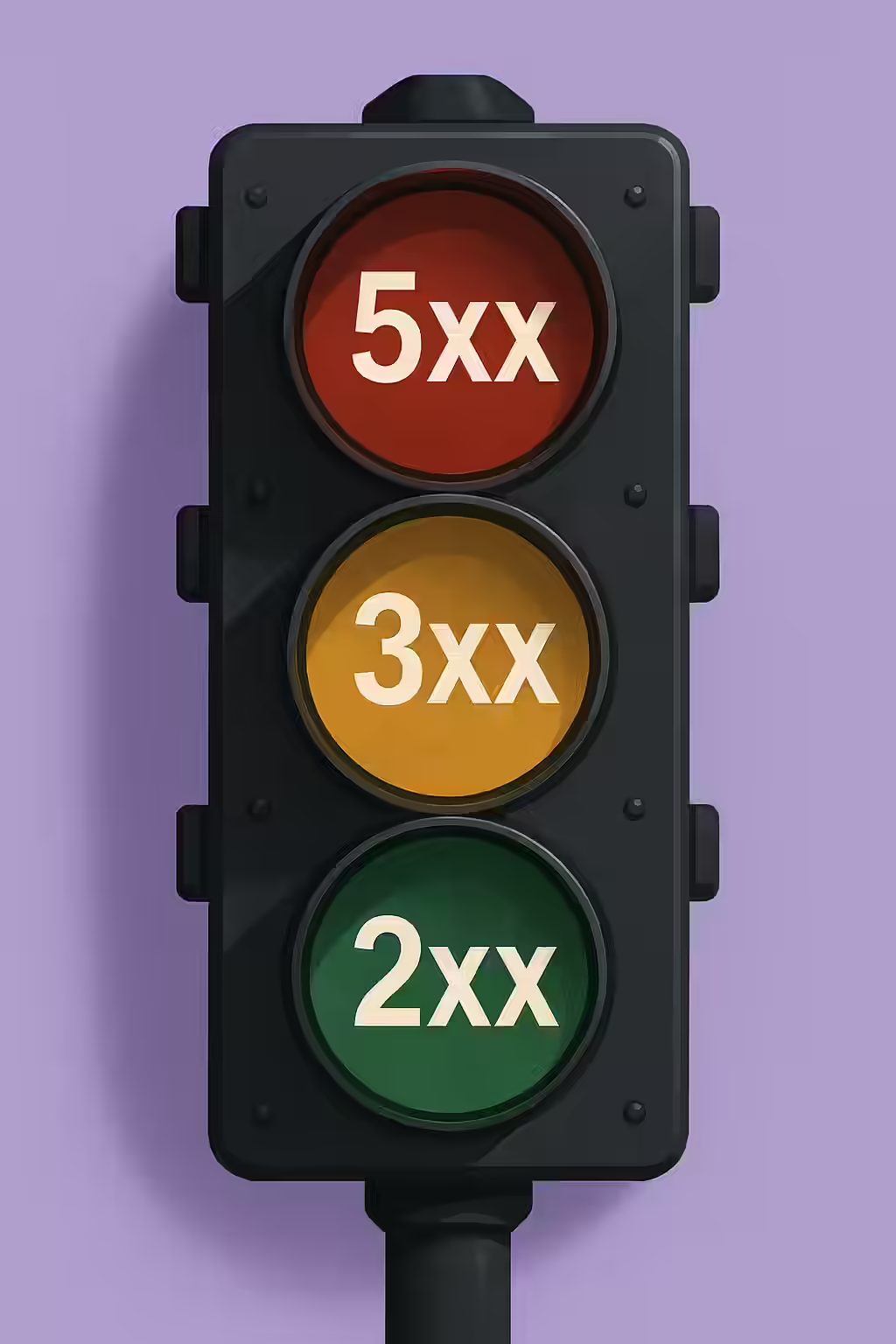
Think of status codes as a short message from the server to your browser. A ‘200 OK’ is a green light, a ‘301 Moved Permanently’ is a detour sign, a ‘404 Not Found’ is a dead end, and a ‘500 Internal Server Error’ means the road is closed. Managing these signals correctly ensures a smooth journey for both users and search engine crawlers. For the most comprehensive and developer-focused guide, the MDN Web Docs are an excellent resource.

Key Topics in HTTP Status Codes

A complete understanding of status codes means knowing the difference between the main classes and how to handle the issues they might represent. The following guides cover the most critical aspects.
category image

The Art of the Digital Detour: A Guide to 3xx Redirects

Learn what 3xx redirects are, how they can impact your SEO, and how to use them effectively to improve your website’s user experience and search engine rankings.

When the Web Goes Silent: A Guide to External No Response Errors

Learn what external no response errors are, how they can impact your SEO, and how to find and fix them for a more reliable and user-friendly website.

The Digital Dead End: How 4xx Client Errors Can Stall Your SEO

Learn what 4xx client errors are, how they can harm your SEO, and how to find and fix them to improve your website’s health and user experience.

When Your Server Takes a Sick Day: A Guide to 5xx Server Errors

Learn what 5xx server errors are, how they can damage your SEO, and how to troubleshoot and fix them for a more stable and reliable website.

The Server’s Distress Signal: Demystifying 5xx Status Codes

Explore the world of 5xx server errors and learn why these status codes are a critical concern for SEO. Discover how to troubleshoot and resolve them.

The Web’s Helpful Detours: Understanding 3xx Redirection

Understand 3xx redirection status codes and their critical role in SEO. Learn how to properly implement redirects to preserve link equity and user experience.

The Green Light of the Web: Understanding 2xx Status Codes

Learn how 2xx status codes signify success in HTTP communication and why they are crucial for a positive SEO performance.

Decoding 4xx Client Errors: A Guide to Fixing Broken Pages

Stop 4xx client errors from hurting your SEO. Learn what codes like 404, 403, 410, and other 4xx errors mean and discover actionable steps to find and fix them.

The X-Content-Type-Options Header: A Shield for Your Website

A missing X-Content-Type-Options header can leave your site vulnerable to MIME-sniffing attacks. Learn how to implement this crucial security header.

Referrer-Policy: Balancing Security and SEO Analytics

A missing Referrer-Policy header can impact your analytics data. Learn what the Referrer-Policy header is and how to implement it for better security and data accuracy.

The Server Down: A Guide to Fixing Internal Server Errors (5xx)

5xx server errors can get your pages de-indexed. Learn what codes like 500 and 503 mean, how to diagnose their causes, and the urgent steps to fix them.

When the User is Wrong: A Guide to 4xx Client Errors

Learn how to identify and fix 4xx client errors, such as the infamous 404 Not Found, to improve your user experience and SEO.

The Sound of Silence: A Guide to Fixing ‘No Response’ Errors

A ‘No Response’ error means your server is failing to answer requests, making your pages invisible to users and search engines. Learn to diagnose and fix this critical issue.

Decoding the Web’s Lingo: A Comprehensive Guide to HTTP Status Codes

From 200 OK to 503 Service Unavailable, learn what each HTTP status code means for your SEO, how to find them, and how to fix the ones that are harming your site.

For the official, technical specification of all registered status codes, see the IANA HTTP Status Code Registry.

Frequently Asked Questions

What are HTTP status codes?

HTTP status codes are three-digit responses sent by a server to a client’s (e.g., a browser’s) request. They indicate whether the request was successful, if there was an error, or if a redirect is in place. Understanding them is fundamental to technical SEO.

What is the difference between a 404 and a 503 error?

A 404 Not Found is a client-side error, meaning the requested URL doesn’t exist on the server. A 503 Service Unavailable is a server-side error, meaning the server is temporarily down or overloaded. For SEO, a 503 tells search engines to come back later, while a persistent 404 can lead to the page being de-indexed.

Which status codes are most important for SEO?

For SEOs, the most critical codes to monitor are 200 (OK), 301 (Permanent Redirect), 404 (Not Found), 410 (Gone), and 503 (Service Unavailable). Each of these provides a strong signal to search engines about the status and availability of your pages.

Ready to tackle all your SEO issues head-on? Start your comprehensive audit with Creeper today.

Get in Touch

Have questions about our services? Contact us today for a free consultation and performance audit.

    By filling out this form, you agree to our Privacy Policy.