The Open Door: A Guide to Website Indexability

Indexability is the foundation upon which all SEO success is built. It refers to a search engine’s ability to find, crawl, and store your web pages in its massive database, known as the index. If a page isn’t in the index, it simply cannot rank in search results. A smart indexability strategy is not just about getting your important pages indexed, but also about strategically preventing unwanted pages (like internal search results or staging environments) from being indexed, which can waste your crawl budget.

Think of your website as a library and search engines as the librarians. You need to provide them with a clear catalog (sitemap), unlock the right doors (robots.txt), and label which books are for public viewing and which are for the archives (meta tags). A strong indexability strategy ensures the librarians can efficiently find and shelve your best work for the public to see. For a broader look at technical SEO, see our guide on on-page SEO.

Key Topics in Indexability

A complete indexability strategy involves managing crawl directives, monitoring server responses, and analyzing how search engines interact with your site. The following guides cover the most critical aspects.

category image

The Final Word: Understanding Your Page’s Canonical Status

Delve into the meaning of canonical status, the difference between user-declared and Google-selected canonicals, and what to do when Google ignores your choice.

One Page, Many URLs: Conquering Canonical Issues

Learn how to resolve canonical issues and consolidate your duplicate content for better SEO performance. A deep dive into the world of canonicalization.

The Hidden Content: A Guide to JavaScript Content

Learn why client-side rendered JavaScript content can be invisible to search engines during the initial crawl and how to fix it with server-side or dynamic rendering.

The Blocked Page: A Guide to Fixing Pages Blocked by Robots.txt

Accidentally blocking important pages in your robots.txt file can make them invisible to search engines. Learn how to find and fix these critical crawl errors.

The Big Picture: A Guide to Analyzing Indexability Distribution

Understanding your site’s indexability distribution is key to a healthy SEO strategy. Learn how to analyze the balance of indexable vs. non-indexable pages.

The Invisible Website: A Guide to Non-Indexability Status

Understand the different reasons why your pages might be non-indexable, from ‘noindex’ tags to canonicalization issues, and learn how to fix them for better SEO.

Noindex vs. Nofollow: A Guide to Controlling Search Bots

Understand the critical difference between the ‘noindex’ directive and the ‘nofollow’ attribute. Learn how to use them correctly to manage indexing and link equity for SEO.

The Invisible Website: A Guide to Non-Indexable URLs

Understand the different reasons why your pages might be non-indexable, from ‘noindex’ tags to canonicalization issues, and learn how to fix them for better SEO.

The Half-Loaded Page: A Guide to Fixing Blocked Internal Resources

Blocking internal CSS or JavaScript files in robots.txt can prevent Google from rendering your pages correctly, severely harming your SEO. Learn how to find and fix this critical issue.

The Open Door: A Guide to Making Your Pages Indexable

An indexable page is the goal for all your important content. Learn the key technical signals that allow search engines to crawl, index, and rank your pages.

The Invisible Page: A Guide to Indexable URLs Not Indexed

When a page is technically indexable but not in Google’s index, it’s a sign of a deeper issue. Learn to diagnose and fix problems with content quality, crawl budget, and internal linking.

For more on the technical side of crawling, check out this guide to crawling and indexing from Moz. For Google’s official perspective, their guide on crawling and indexing is an essential resource.

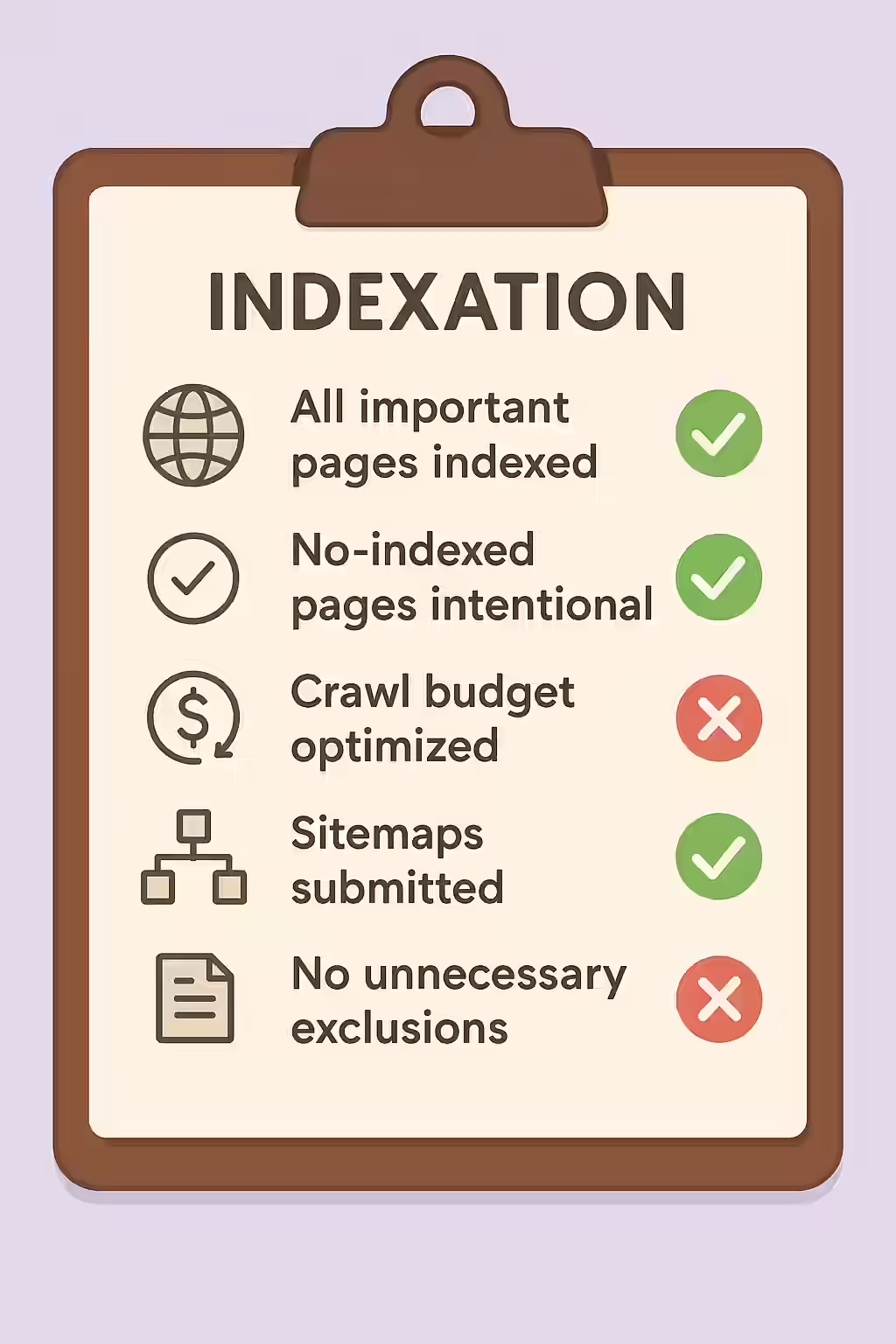
An illustration of a checklist, symbolizing the steps to ensure your website is well-indexed.

Frequently Asked Questions

What's the difference between crawling and indexing?

Crawling is the process where search engine bots (spiders) discover your pages by following links. Indexing is the process of analyzing and storing the content of those crawled pages in a massive database. A page must be crawled to be indexed, and it must be indexed to appear in search results.

What is crawl budget?

Crawl budget is the number of pages that a search engine will crawl on your website in a given period of time. By preventing unimportant pages from being indexed, you can focus your crawl budget on your most valuable content.

If I block a page in robots.txt, will it be removed from the index?

Not necessarily. Blocking a page in robots.txt prevents Google from crawling it, but if the page was already indexed, it might remain in the search results. The correct way to remove a page from the index is to use a ‘noindex’ meta tag.

Ready to tackle all your SEO issues head-on? Start your comprehensive audit with Creeper today.

Get in Touch

Have questions about our services? Contact us today for a free consultation and performance audit.

    By filling out this form, you agree to our Privacy Policy.