The Architectural Blueprint of Your Website: A Guide to Site Structure

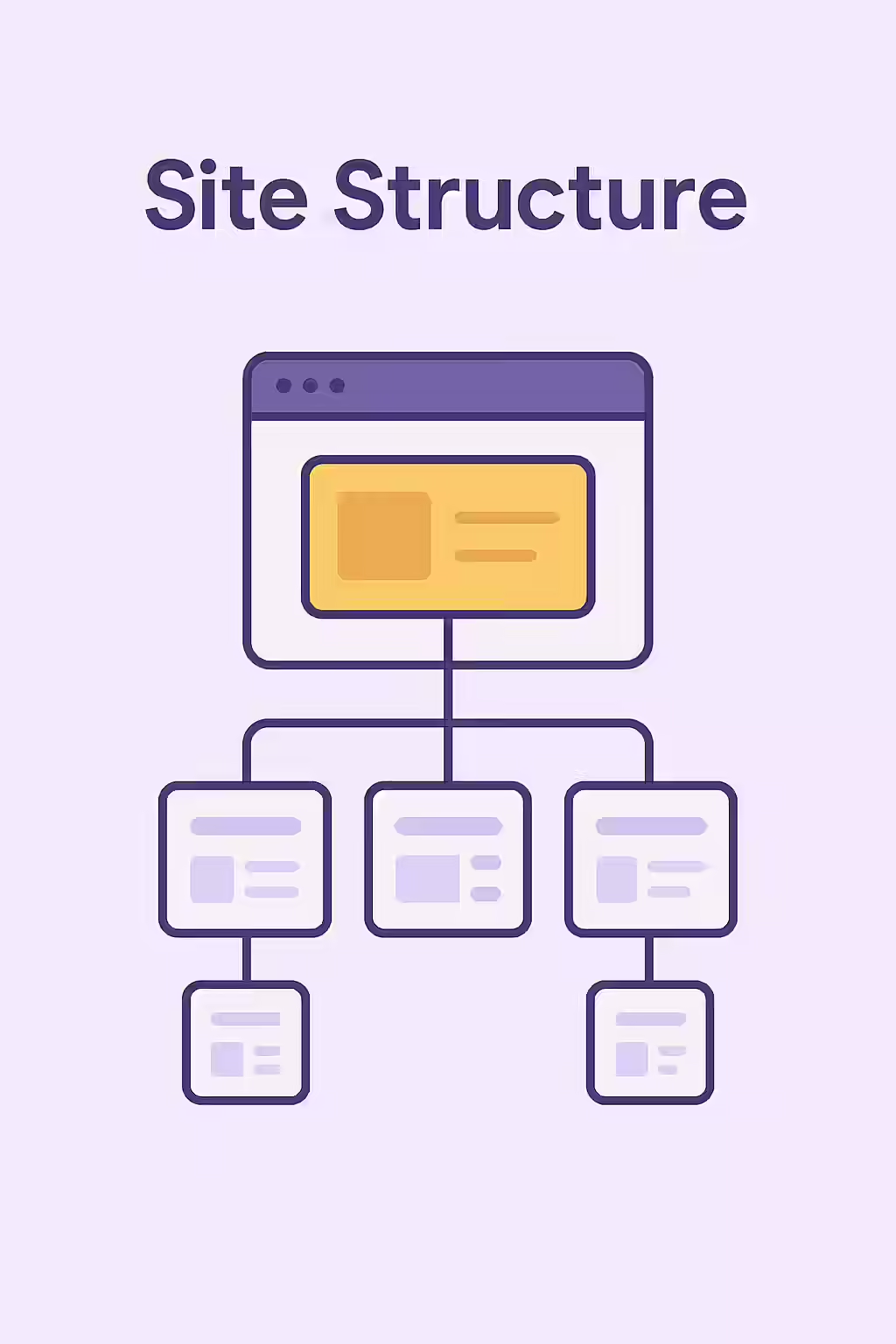
Just like a house needs a solid foundation and a logical layout, your website needs a well-planned site structure. Your site’s structure is the way its pages are organized and linked together. It’s the architectural blueprint that guides your users and search engines through your content, impacting everything from crawlability and indexing to the flow of authority through your site. A good site structure is one of the most important, yet often overlooked, aspects of a successful SEO strategy.

Think of your website as a library. If the books are scattered randomly on the shelves, it’s going to be impossible for anyone to find what they’re looking for. But if the books are organized by category and subcategory, it’s easy for anyone to find the information they need. The same is true for your website. For a comprehensive overview, check out this guide from Google on site structure.

Key Topics in Site Structure

A strong site structure is built on several key components, from the format of your URLs to the way you guide crawlers with a sitemap. The following guides cover the most critical aspects.
category image

The Powerhouses of the Web: A Guide to the Top 10 Most Linked Pages

Learn about the top 10 most linked pages and how they can help you to improve your SEO.

The Tangled Web: A Guide to Spaces in URLs

Learn why spaces in URLs are bad for SEO and user experience, how they get encoded as ‘%20’, and how to fix them by using hyphens and 301 redirects.

Plumbing the Depths: A Guide to Understanding Crawl Depth

Learn what crawl depth is and why it’s a crucial factor for SEO. Discover how to optimize your site’s structure to improve crawlability and indexability.

For another excellent resource on this topic, check out this guide to site architecture from Moz.

Frequently Asked Questions

What is site structure?

Site structure is the way your website’s pages are organized and linked together. A good site structure is logical, hierarchical, and easy for both users and search engines to navigate.

Why is site structure important for SEO?

Site structure is crucial for SEO because it helps search engines to crawl and index your site more efficiently. It also helps to distribute link equity throughout your site and creates a better user experience, which can lead to higher rankings.

What is the difference between a 'flat' and a 'deep' site structure?

A ‘flat’ site structure ensures that any page can be reached in a small number of clicks (ideally 3-4) from the homepage. A ‘deep’ structure requires many clicks to reach specific pages. A flat structure is generally better for SEO as it allows link equity to flow more easily and helps search engines discover content faster.

What role do breadcrumbs play in site structure?

Breadcrumbs are a secondary navigation aid that shows users their location in the site’s hierarchy. They are excellent for user experience and also help search engines understand the relationship between pages, reinforcing your site structure.

Ready to tackle all your SEO issues head-on? Start your comprehensive audit with Creeper today.

Get in Touch

Have questions about our services? Contact us today for a free consultation and performance audit.

    By filling out this form, you agree to our Privacy Policy.