Have you ever landed on a webpage and been confronted with a wall of dense, impenetrable text? That’s the hallmark of difficult readability. It’s a major turn-off for users and a significant roadblock for SEO. If your content is hard to read, your audience will quickly lose interest and bounce, sending a negative signal to search engines. Improving your content’s readability is one of the most effective ways to create a better user experience and boost your SEO performance.
Readability is all about making your content easy to understand. It’s not about dumbing down your ideas, but about presenting them in a clear, concise, and engaging way. For a deeper dive into creating high-quality content, see our article on low-content pages.
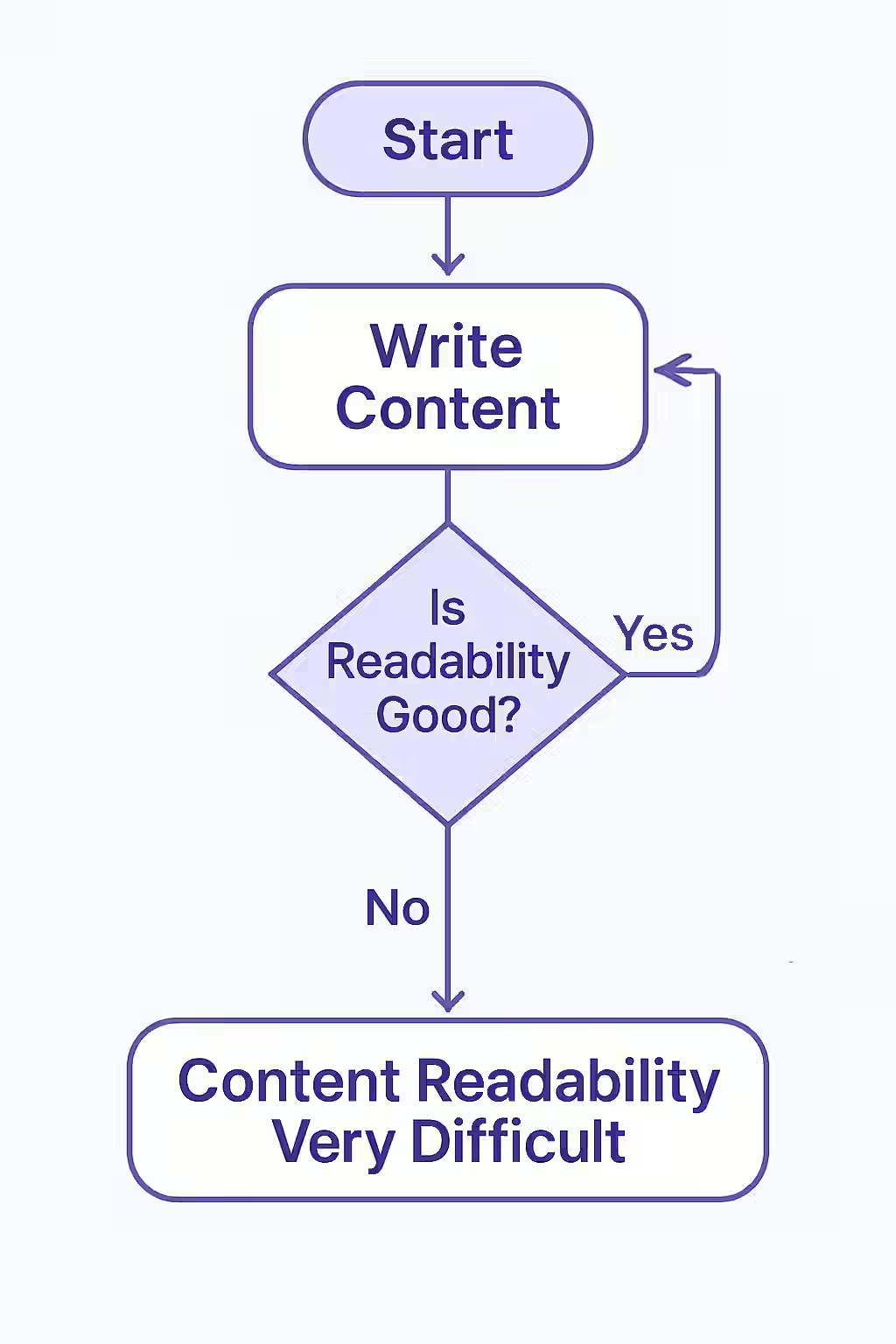
Your Guide to Clear and Concise Content
Improving your content’s readability is a matter of following a few simple principles. Here are some tips to help you untangle your words and create a more engaging reading experience:
- Use Short Sentences and Paragraphs: Break up your text into smaller, more manageable chunks. This makes it easier for readers to scan and digest your content.
- Choose Simple Words: Avoid jargon and complex vocabulary whenever possible. If you must use a technical term, be sure to explain it clearly.
- Use Headings and Subheadings: Organize your content with clear and descriptive headings. This helps readers to navigate your page and find the information they’re looking for.
- Use Bullet Points and Numbered Lists: Break up long blocks of text with bullet points and numbered lists. This makes your content more scannable and easier to read.
- Use Images and Videos: Visual content can help to break up your text and make your page more engaging.
- Check for Grammar and Spelling Errors: Nothing undermines credibility faster than simple typos.
Readability in Action: Before and After
Before: “The utilization of multifaceted synergistic strategies is imperative for the optimization of user engagement metrics, which can be effectuated through the implementation of a panoply of content diversification methodologies.”
After: “To get more people to engage with your content, you need a clear plan. Try using different types of content, like videos and blog posts, to keep your audience interested.”
The SEO Power of Readable Content
Readable content is a win-win for both users and SEO. When your content is easy to read, users are more likely to stay on your page, engage with your content, and convert. This sends a strong positive signal to search engines, which can lead to improved rankings and more organic traffic. For more on the importance of user experience, check out this guide to user experience from Moz.
Don’t let difficult readability be the Achilles’ heel of your SEO strategy. By taking the time to improve the clarity and conciseness of your content, you can create a better experience for your users and reap the SEO rewards. For a great tool to check your content’s readability, check out Readable.com.
Frequently Asked Questions
What is a good readability score?
A good readability score depends on your target audience, but generally, a score that corresponds to an 8th-grade reading level (a Flesch-Kincaid score of around 60-70) is a good target for most websites.
What is the Flesch-Kincaid Reading Ease test?
The Flesch-Kincaid Reading Ease test is a widely used formula that scores a piece of text on a 100-point scale. The higher the score, the easier the text is to understand. It’s based on the average number of syllables per word and words per sentence.
Does readability directly impact SEO rankings?
While readability is not a direct ranking factor, it has a strong indirect impact on SEO. Readable content leads to better user engagement signals, such as lower bounce rates and longer time on page, which are important for rankings.
Is your content a tangled mess of words? Use Creeper to analyze your readability and start creating clearer, more engaging content today.