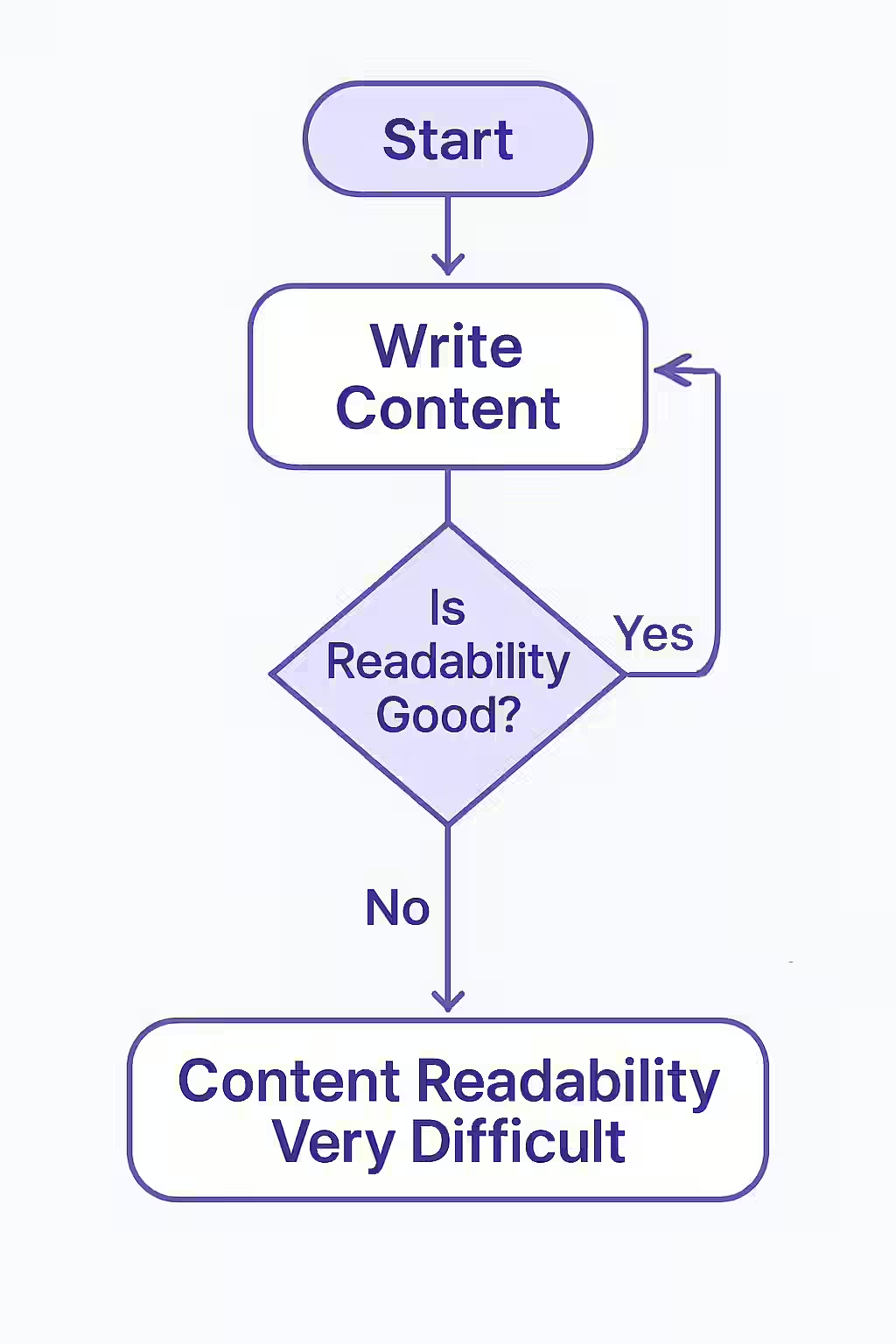
If difficult readability is a tangled ball of yarn, then very difficult readability is a solid brick wall. It’s content that is so dense, so complex, and so poorly formatted that it’s nearly impossible for the average user to understand. This is a major SEO red flag, and it’s a problem that needs to be addressed with urgency. If your content is a wall of text, you’re not just losing users; you’re telling search engines that your site is not a valuable resource.
Very difficult readability is often the result of a combination of factors: long, convoluted sentences, a heavy reliance on jargon, and a complete lack of formatting. The good news is that even the most impenetrable wall of text can be broken down into a clear and engaging piece of content. For a deeper dive into creating user-friendly content, see our article on on-page SEO.

Your Wrecking Ball for the Wall of Text
Fixing very difficult readability requires a more aggressive approach than simply tweaking a few sentences. Here’s how to do it:
- Start from Scratch: In some cases, the best approach is to simply start over. Take the core ideas of your content and rewrite them in a clear, concise, and engaging way.
- Simplify, Simplify, Simplify: Your primary goal is to simplify. Break down complex ideas into smaller, more digestible chunks. Use shorter sentences, simpler words, and a more direct writing style.
- Structure is Your Friend: Use headings, subheadings, bullet points, and numbered lists to create a clear and logical structure for your content. This will make it much easier for readers to scan and understand.
- Get a Second Opinion: Ask someone who is not familiar with the topic to read your content and give you feedback. If they can’t understand it, then you still have work to do.
- Check for Grammar and Spelling Errors: Basic errors can make complex topics even harder to understand.
Readability in Action: Before and After
Before: “The efficaciousness of our proprietary, blockchain-enabled logistical paradigm is substantiated by a plethora of empirical data points, which, upon rigorous analysis, demonstrate a marked enhancement in throughput efficiency, notwithstanding the inherent complexities of multi-jurisdictional regulatory compliance.”
After: “Our new logistics system works well. We have a lot of data that shows it improves efficiency, even in complex legal environments.”
The SEO Breakthrough of Clear Content
The rewards for fixing very difficult readability are immense. By making your content accessible to a wider audience, you can significantly improve your user engagement signals, which can lead to a major boost in your SEO rankings. For more on the importance of creating high-quality content, check out this guide to what is great content from HubSpot. For more on the importance of web readability, check out this article from the Nielsen Norman Group.
Frequently Asked Questions
What makes content ‘very difficult’ to read?
Content is considered ‘very difficult’ to read when it has a combination of long, complex sentences, a high percentage of jargon, and a lack of formatting to break up the text. This type of content is often found in academic papers, legal documents, and technical manuals.
What Flesch-Kincaid score is ‘very difficult’?
A Flesch-Kincaid Reading Ease score between 0 and 30 is generally considered ‘very difficult’ to read and best understood by university graduates.
What is the single most effective way to improve very difficult readability?
The single most effective way to improve very difficult readability is to simplify your sentence structure. Break down long, complex sentences into shorter, more direct ones. This will have the biggest impact on your readability score.
Is your content a wall that’s blocking your users? Use Creeper to identify your most difficult content and start breaking down the barriers to communication.