Exact duplicates are pages on your website that have identical, word-for-word content but exist on different URLs. This is a critical technical SEO issue because it forces search engines to make a choice: which page should they index and rank? This confusion can lead to split ranking signals, wasted crawl budget, and unpredictable performance in search results. Fixing exact duplicates is a fundamental step in establishing a clean and authoritative site structure.
Think of your website as a library. If you have two books that are completely identical but have different call numbers, the librarian (the search engine) doesn’t know which one to recommend. As a result, recommendations for that book might be split between the two copies, weakening its overall authority. For a deeper dive into this topic, see our guide on canonical issues.
How Do Exact Duplicates Happen?
Most duplicate content is created unintentionally. Understanding the common causes can help you prevent it from happening in the first place.
- Protocol and Subdomain Variations: The same page being accessible via
http://vs.https://, orwww.vs. non-www.versions. - URL Parameters: Using URL parameters for session IDs or tracking that don’t change the page’s content.
- Staging Environments: An unblocked staging or development version of your site can be discovered and indexed by search engines.
- Content Syndication: If your content is republished on other sites without a canonical tag pointing back to your original article.
A Step-by-Step Guide to Consolidating Duplicates
Fixing exact duplicates is about sending a clear, unambiguous signal to search engines. Here is the prioritized list of solutions.
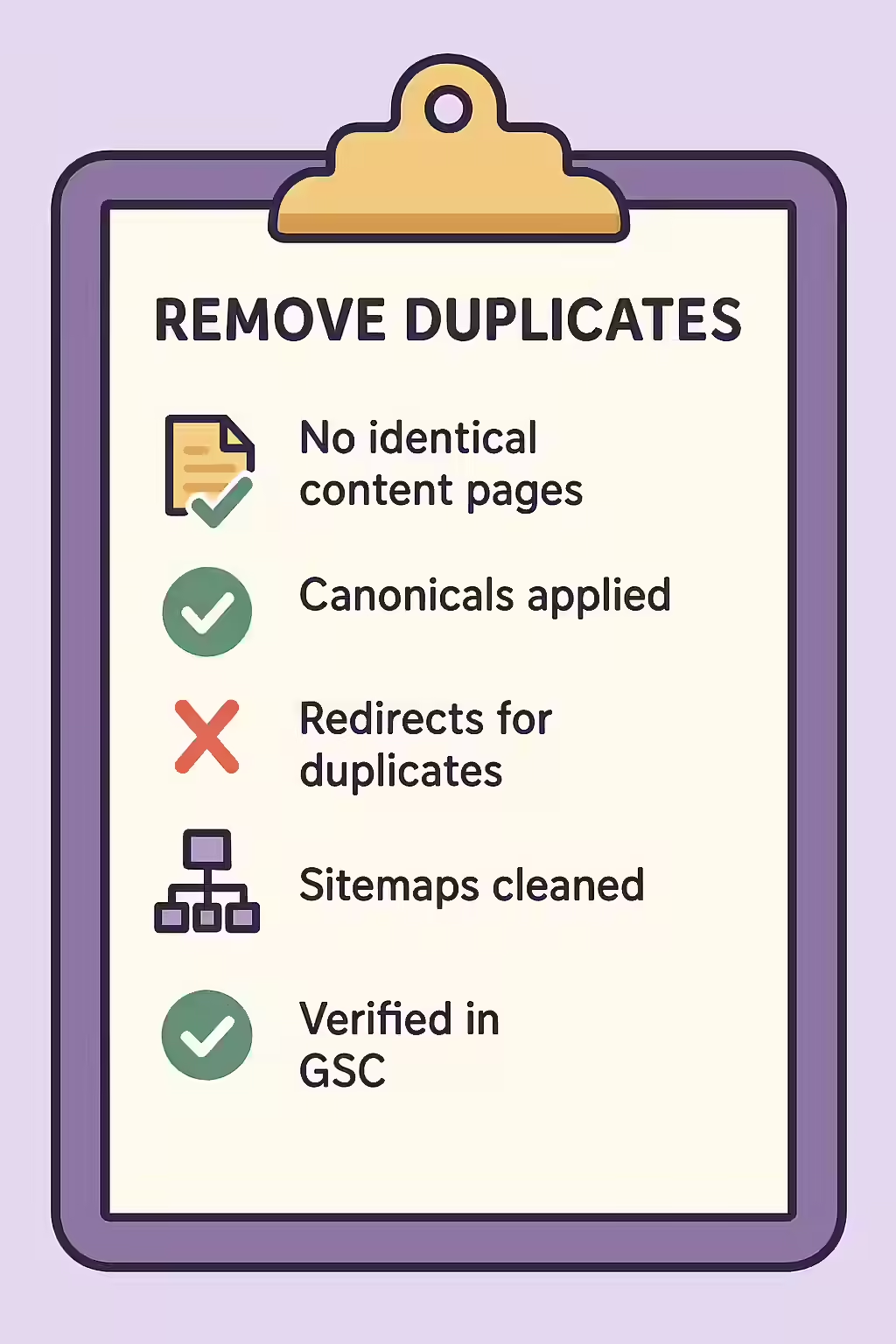
- Implement a 301 Redirect (Preferred Method): For pages that are true duplicates, a 301 redirect is the best solution. This permanently redirects users and search engines from the duplicate URL to the preferred (canonical) URL, consolidating all ranking signals to one place.
- Use a Canonical Tag: If a 301 redirect is not feasible (for example, if you need the duplicate page to remain accessible for specific users), the `rel=”canonical”` tag is a strong hint to search engines to consolidate ranking signals to your preferred URL.
- Ensure Consistent Internal Linking: Always link to the same version of a URL throughout your site. Avoid linking to the `http` version on one page and the `https-www` version on another.
For another excellent resource on this topic, check out this guide to duplicate content from Moz.
Frequently Asked Questions
Is there a ‘duplicate content penalty’?
Not in the way most people think. According to Google’s own documentation, duplicate content is not grounds for a penalty unless it’s intended to be deceptive. However, it can still harm your rankings by splitting link equity and causing search engines to choose the wrong URL to display, which has the same effect as a penalty.
What’s the difference between exact duplicates and near duplicates?
Exact duplicates are pages where the content is identical (100% the same). Near duplicates are pages where a large portion of the content is the same, but with minor differences, such as a different date or a slightly rephrased sentence. Both should be consolidated using canonical tags or redirects.
How do I fix exact duplicates?
The best way to fix exact duplicates is to use a 301 redirect to send all traffic and link equity from the duplicate versions to the one you want to be the main version. If a redirect isn’t possible, a canonical tag can be used as a strong hint to search engines.
Ready to fix your two-faced pages? Start your Creeper audit today and see how you can improve your website’s content.