In the grand gallery of your website, the H1 tag is the title of your masterpiece. It’s the single most important on-page heading, setting the tone for the rest of the experience. A proper H1 setup is a fundamental aspect of on-page SEO, and it’s a crucial factor in how both users and search engines understand your content. This guide will explore the art and science of the H1 tag, from its definition to its ideal length and beyond.
Think of your H1 tag as the North Star of your webpage. It’s a guiding light that helps users and search engines to navigate your content and understand its main theme. A well-crafted H1 tag can make the difference between a user who stays and engages, and one who bounces. For a deeper dive into the world of on-page SEO, see our article on on-page SEO.

The Anatomy of a Perfect `<h1>`
A proper H1 setup is all about clarity, conciseness, and consistency. Here are the key elements of a perfect H1 tag:
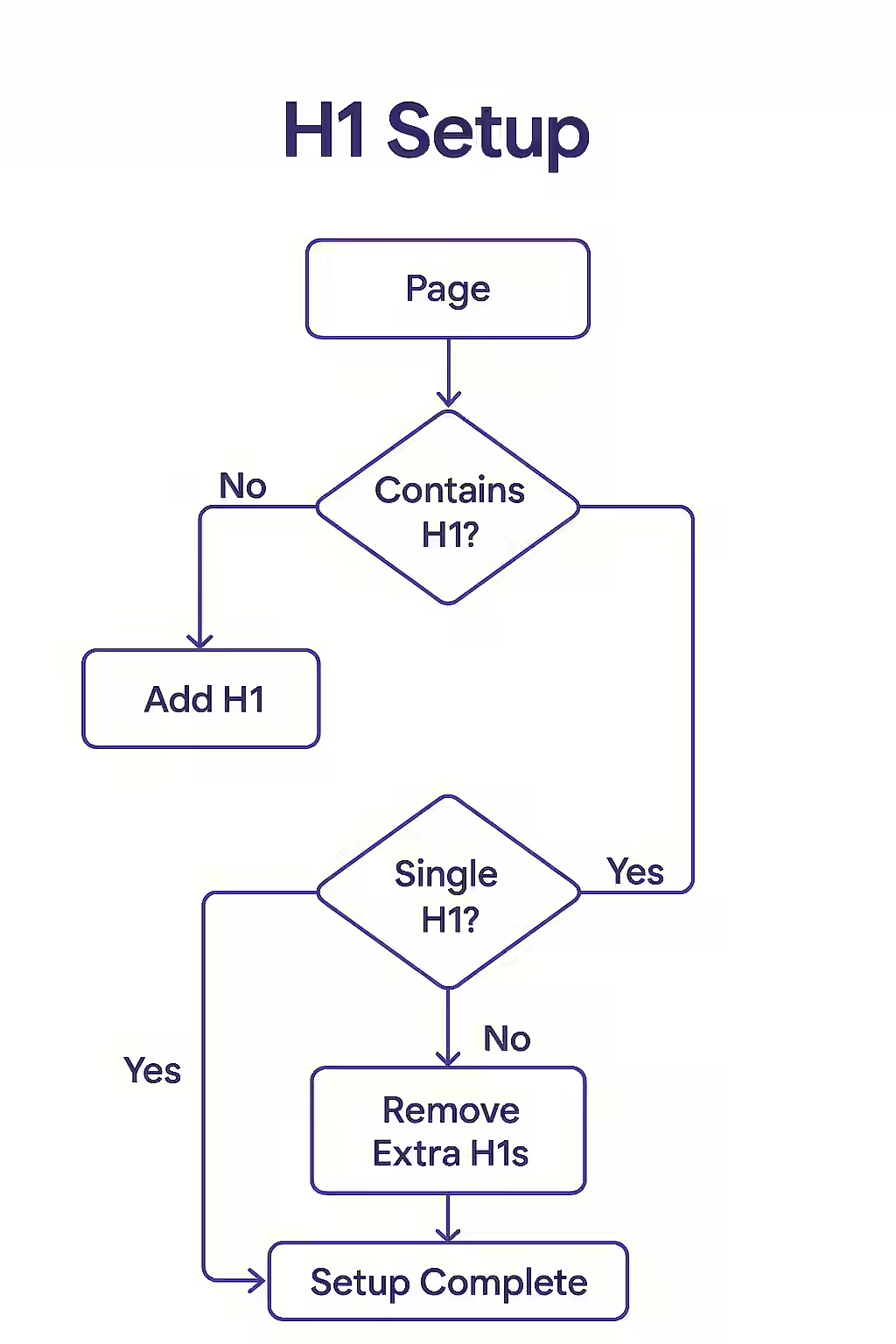
- One H1 Tag Per Page: It’s a best practice to only have one H1 tag per page. This avoids duplicate H1s and ensures that your main heading is clear and concise.
- A Unique and Descriptive H1 Tag: Your H1 tag should be unique to each page and should accurately describe the content of that page.
- The Goldilocks Length: The ideal H1 length is between 20 and 70 characters. This is long enough to be descriptive, but short enough to be easily readable.
- Front-Load Your Keywords: Place your most important keywords at the beginning of your H1 tag. This can help to improve your rankings for those keywords.
- A Good Match for Your Title Tag: While your H1 tag and title tag don’t have to be identical, they should be closely related. This will create a more consistent experience for both users and search engines.
The SEO Power of a Perfect H1 Tag
A well-crafted H1 tag is a powerful tool for SEO. It can help to improve your rankings for relevant keywords, and it can also improve the user experience by making your content more accessible and easier to understand. For more on the importance of on-page SEO, check out this guide to H1 tags from Moz. For another great resource, check out this article from Search Engine Journal.
Frequently Asked Questions
What is an H1 tag?
An H1 tag is an HTML element that is used to define the main heading of a webpage. It’s one of the most important on-page SEO factors, as it tells both users and search engines what your page is about.
Does the H1 tag need to be the first thing on the page?
No, not necessarily. While it should appear high up on the page for a good user experience, it’s perfectly normal for it to appear after the main navigation menu. The important thing is that it is the primary, most prominent heading in the main content area of the page.
What is the difference between an H1 tag and a title tag?
The H1 tag is the main heading that is displayed on the page, while the title tag is the text that appears in the browser tab and in the search results. While they can be the same, they don’t have to be.
Is your H1 tag a masterpiece? Start your Creeper audit today and make sure your H1 setup is picture-perfect.