In the world of SEO, while conciseness is often a virtue, an `<h1>` tag that is too short is a missed opportunity. An H1 tag under 20 characters often lacks the detail needed to provide clear context to users and search engines. While not as damaging as an overly long H1, a short H1 fails to take full advantage of this critical on-page SEO element. This guide will explore the importance of writing descriptive H1 tags and how to fix them.
Think of your website as a library. You want to make sure that all the books have a clear and descriptive title. A short H1 is like a book with a one-word title—it’s not very informative. By fixing any H1 tags under 20 characters, you can create a more successful and user-friendly experience for everyone. For a deeper dive into the world of SEO, see our article on on-page SEO.
The Problem with Vague Headlines
A short H1 is often a vague H1. This can cause several problems:
- Lack of Context: A short H1 like “Services” or “About” provides very little context for the user or for search engines. It doesn’t explain what the page is about in any detail.
- Missed Keyword Opportunities: A longer, more descriptive H1 can naturally include important keywords that you are targeting, which is a strong relevance signal for search engines.
How to Write More Descriptive H1s
Fixing a short H1 tag is a simple but important task. The goal is to expand it to be more descriptive while remaining concise. For more on this, see the Search Engine Journal’s guide to H1 tags.
H1 Length in Action: Before and After
Before: `<h1>Services</h1>` (8 characters)
After: `<h1>Our Professional SEO Services</h1>` (29 characters)
Just as an overly short H1 can be a problem, so can an H1 that is too long. For another excellent resource, check out this guide to H1 tags from Moz.
Frequently Asked Questions
What is the ideal length for an H1 tag?
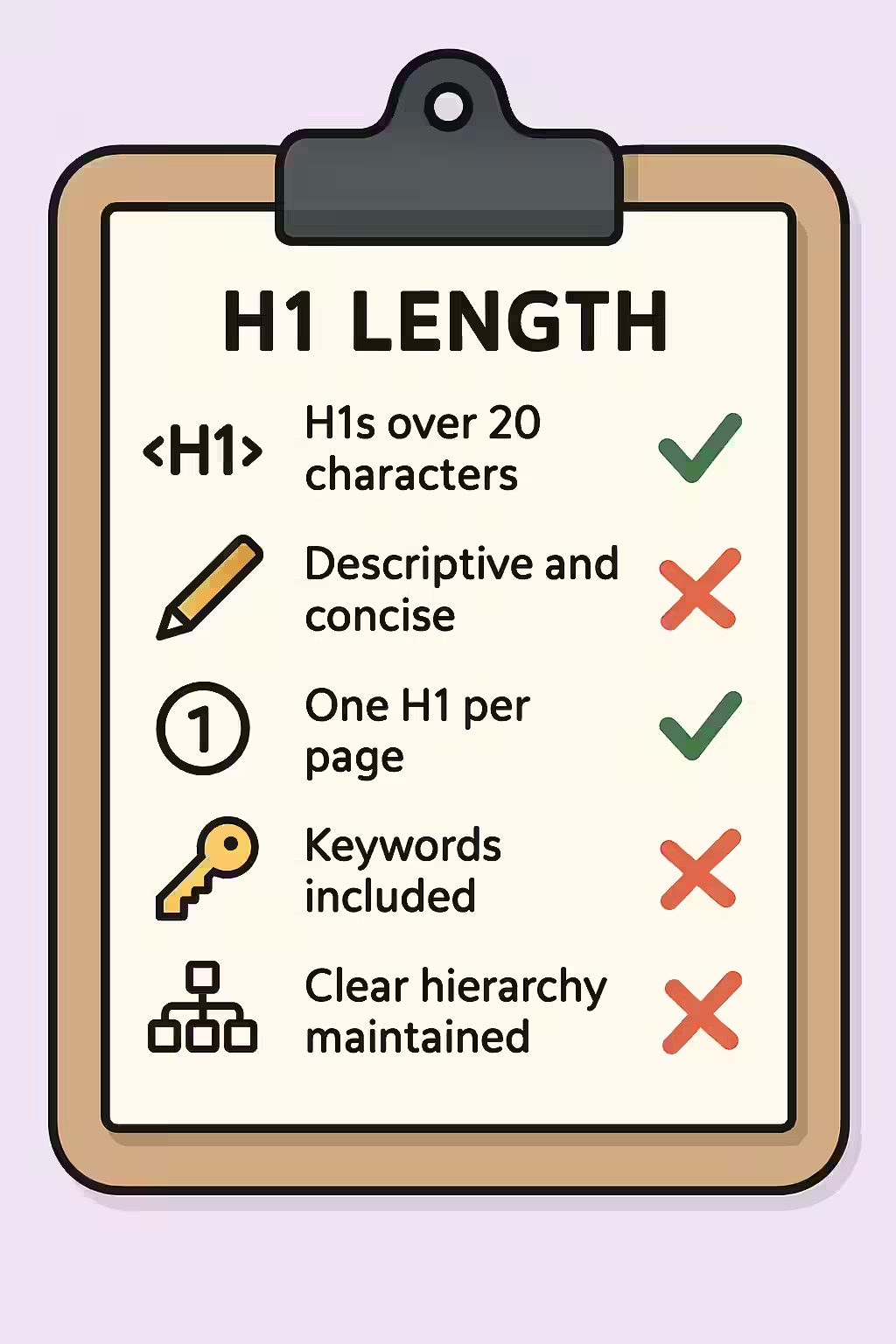
The ideal H1 length is between 20 and 70 characters. This provides enough room to be descriptive and include keywords without being so long that it’s difficult for users to read.
Is a short H1 tag always bad?
Not always, but usually. For a homepage, a short H1 like ‘Welcome’ or the company name is acceptable. However, for internal pages that are targeting specific topics, a short H1 is a major missed opportunity for providing context and including relevant keywords.
How do I fix H1 tags under 20 characters?
The best way to fix a short H1 tag is to rewrite it to be more descriptive of the page’s content. Think about the main topic of the page and the keywords you are targeting, and craft a headline that is both informative and engaging.
Ready to fix your short stories? Start your Creeper audit today and see how you can improve your website’s H1 tags.