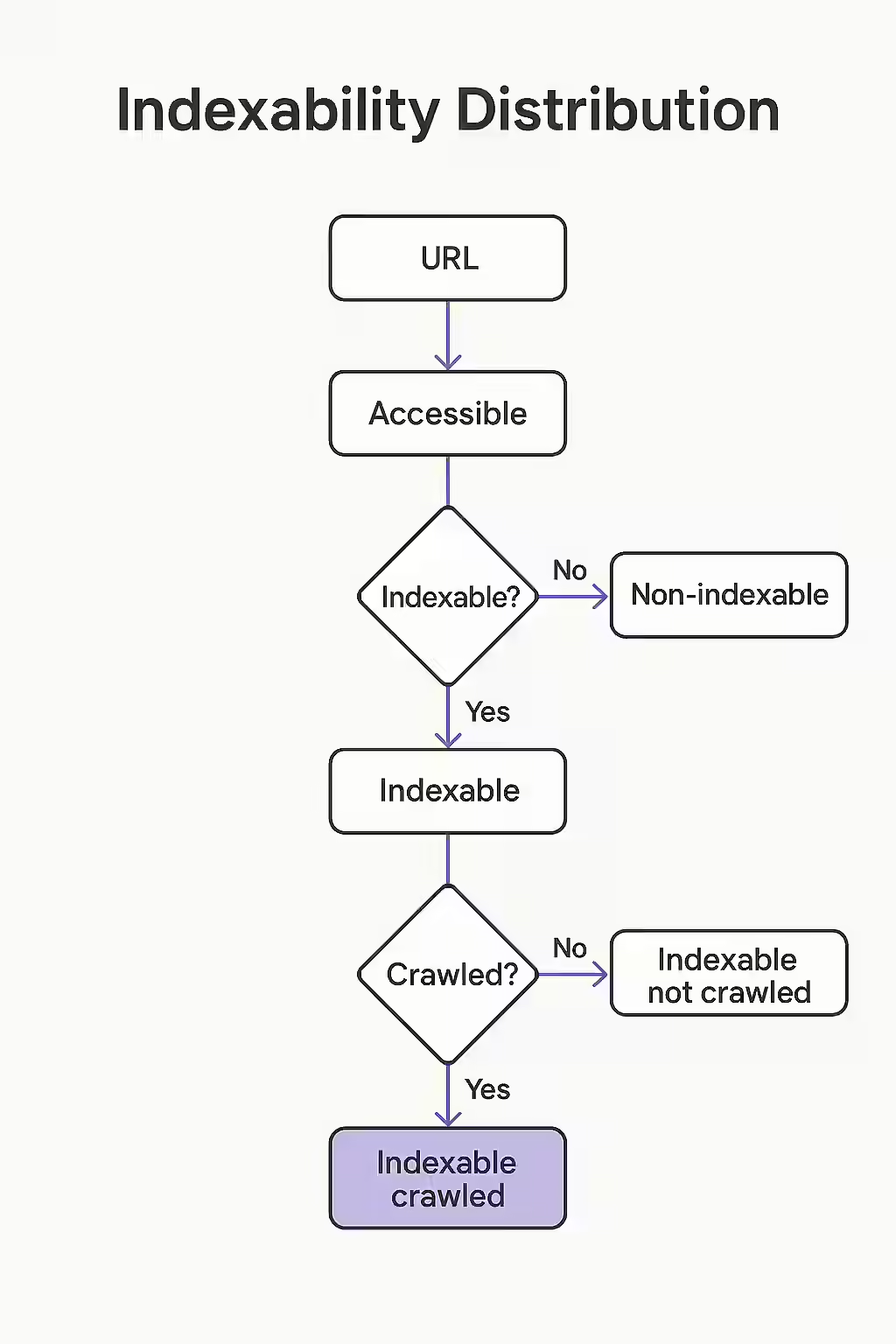
A website is more than just its homepage. It’s a collection of hundreds or thousands of URLs, not all of which are meant to be seen by search engines. Indexability distribution is a high-level view of your website that shows the ratio of pages that are indexable versus those that are non-indexable. Analyzing this distribution is a critical health check for your site, as it can reveal serious issues like wasted crawl budget or, even worse, valuable content being hidden from Google.
Think of your website as a farm. You want your prize-winning crops (your main content) to get all the sunlight and water (crawl budget and link equity). The weeds and service roads (low-value pages) shouldn’t be competing for the same resources. A healthy indexability distribution ensures that you are guiding search engines to focus only on what’s important. For a broader look at this topic, see our main guide on the indexability category.

Understanding the Two Sides of the Coin
Your site’s URLs will fall into one of two main categories. A successful SEO strategy requires actively managing both.
- Indexable Pages: These are the pages you *want* to appear in search results. They should return a `200 OK` status code and have no blocking directives like a ‘noindex’ tag or a disallow rule in `robots.txt`.
- Non-Indexable Pages: These are pages you intentionally block from search results. This includes admin logins, internal search results, and thank-you pages. This is a good practice to avoid issues like near-duplicate content.
For a deep dive into controlling what Google can access, their guide on blocking indexing is an essential read.
How to Analyze and Improve Your Distribution
The goal is to ensure that the pages you think are indexable actually are, and vice versa. This requires a systematic audit.
- Crawl Your Website: Use an SEO audit tool like Creeper to perform a full crawl. The resulting report will provide a top-level view of your indexability distribution.
- Review Non-Indexable URLs: Look at the list of non-indexable pages. Are there any important content pages on this list? If so, investigate why they are being blocked. It could be an incorrect noindex tag or a mistake in your `robots.txt` file. This can often be the cause of an indexable URL not being indexed.
- Review Indexable URLs: Look at the list of indexable pages. Are there any low-value pages here (e.g., URLs with parameters, tag archives)? If so, you should take steps to make them non-indexable to conserve crawl budget.
For more on this topic, this guide from Ahrefs provides excellent insights into managing your crawl budget effectively.
Frequently Asked Questions
What is a ‘healthy’ indexability distribution?
There is no single percentage that fits all sites. A healthy distribution is one where all of your high-value, unique content pages are indexable, and all low-value pages (like internal search results, archives, or admin pages) are intentionally made non-indexable. The goal is to have a high percentage of your *important* pages be indexable.
What is ‘index bloat’?
Index bloat is when a large number of low-value, thin, or duplicate content pages are being indexed by search engines. This can dilute your site’s authority and waste crawl budget. A good indexability strategy aims to prevent index bloat by making these pages non-indexable.
Where can I see my site’s indexability distribution?
A website crawler like Creeper will provide a detailed breakdown of indexable vs. non-indexable pages found during a crawl. Additionally, the Index Coverage report in Google Search Console gives you the most accurate view of how Google is actually indexing your site, including all pages it has discovered.
Do you have the right pages in the index? Start your Creeper audit today to get a clear picture of your site’s indexability.