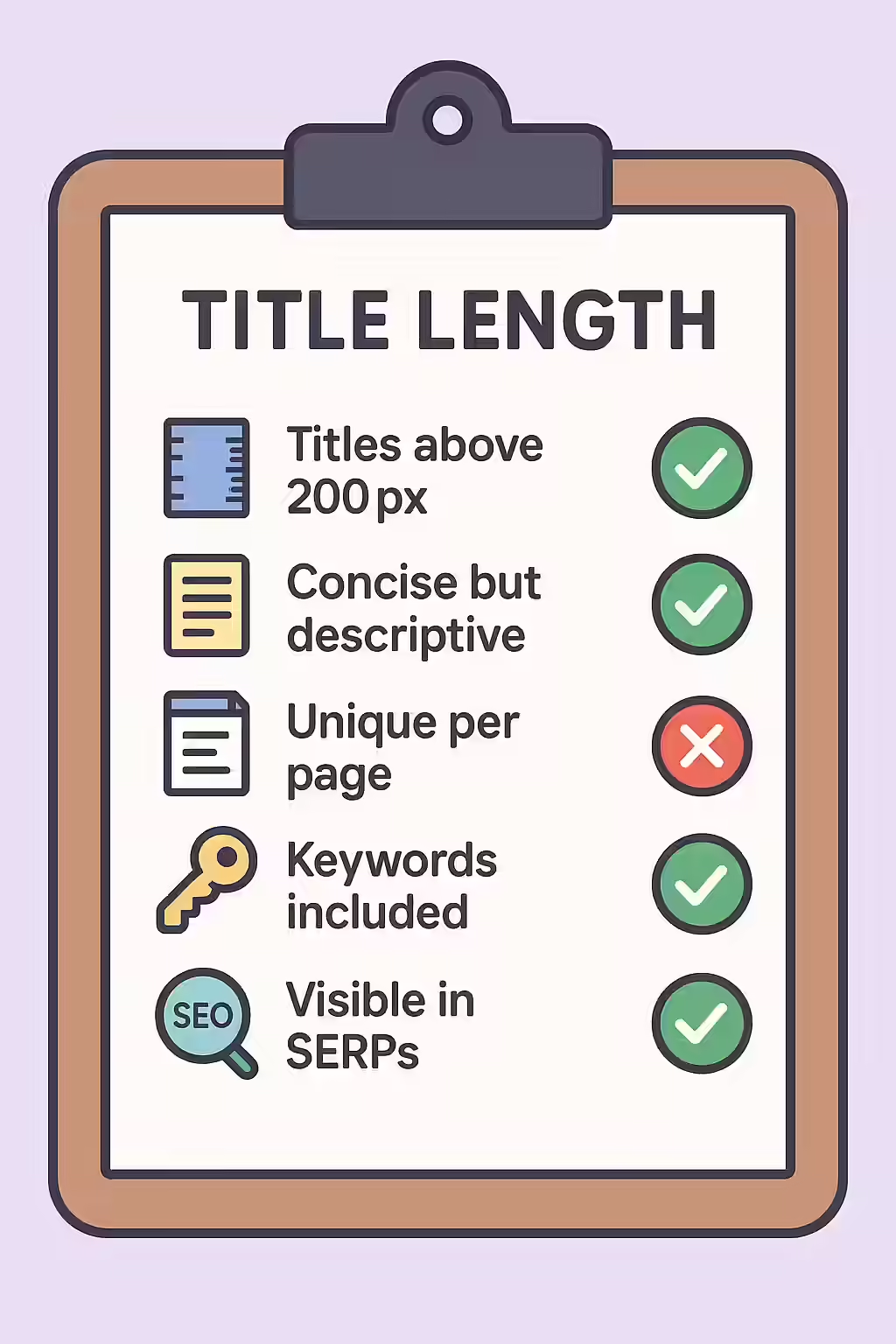
While it’s well-known that a long page title can be truncated in the search results, a title that is too short (below 200 pixels) is an equally critical missed opportunity. The `<title>` tag is your most powerful on-page element for signaling relevance to search engines. A title that is too brief fails to provide enough information for search engines to understand your page’s content and for users to be enticed to click.
Think of your page title as a book title. A book simply titled ‘Story’ gives you no reason to pick it up. A title like ‘A Gripping Mystery of a Detective in 1940s London’ is far more compelling. For a broader look at title optimization, see our guide on page titles and metadata.

Why a Short Title is a Wasted Opportunity
A well-crafted title is a cornerstone of on-page SEO. As explained in Google’s own SEO Starter Guide, descriptive titles are essential.
- Lack of Keyword Relevance: A short title often lacks the space to include your primary and secondary keywords, making it difficult for search engines to rank your page.
- Low Click-Through Rate (CTR): Vague, short titles do not stand out in the search results and fail to give users a compelling reason to click on your page over a competitor’s.
- Wasted SEO Potential: You are giving up your best chance to tell search engines and users what your page is about.
A Step-by-Step Guide to Writing More Effective Titles
The goal is to write a title that is both descriptive and concise, fitting within the ideal pixel length. For more on this, check out this guide to title tags from Moz.
Code Example: From Too Short to Just Right
<!-- Before: Too short and uninformative -->
<title>Services</title>
<!-- After: Descriptive and keyword-rich -->
<title>Digital Marketing & SEO Services | Creeper</title>- Identify Your Short Titles: Use an SEO audit tool like Creeper to crawl your site and identify any pages with titles below 200 pixels.
- Prioritize Key Pages: Start by rewriting the titles for your most important pages, such as your homepage, category pages, and top-performing blog posts.
- Incorporate Keywords Naturally: Your title should include your primary keyword in a way that reads naturally to a human.
- Add Your Brand Name: Including your brand name at the end of the title helps to build brand recognition.
The SEO Power of a Well-Structured Website
A well-structured website uses every opportunity to signal its relevance and quality to search engines. By fixing your short page titles, you can improve your rankings, attract more clicks, and provide a better user experience. This is a key part of a successful on-page SEO strategy.
Frequently Asked Questions
Why is a short page title a problem for SEO?
A short page title is a wasted opportunity. The title tag is a primary signal that tells search engines what your page is about. A title that is too short (e.g., just ‘Home’ or ‘Products’) fails to provide enough context for search engines to rank your page for its target keywords. It also fails to attract users in the search results.
What is the ideal length for a page title?
The ideal length for a page title is between 300 and 561 pixels, which roughly corresponds to 50-60 characters. This is long enough to be descriptive and include your target keywords, but short enough to avoid being truncated in the search results.
How do I fix my short page titles?
The fix is to rewrite your short titles to be more descriptive. Include your primary keyword, accurately describe the content of the page, and consider adding your brand name at the end. Use a website crawler like Creeper to find all the pages with short titles and prioritize them for rewriting.
Ready to fix your short stories? Start your Creeper audit today and see how you can improve your website’s page titles.