A properly implemented paginated series is a clear signal to search engines, helping them to understand the relationship between your pages and to discover your content. A sequence error in pagination is a critical technical issue that breaks this signal. This occurs when the `rel=”next”` and `rel=”prev”` tags do not form a logical, unbroken chain, which can confuse search engines and prevent them from crawling all of the pages in the series. This guide will explain why this is a problem and how to fix it.
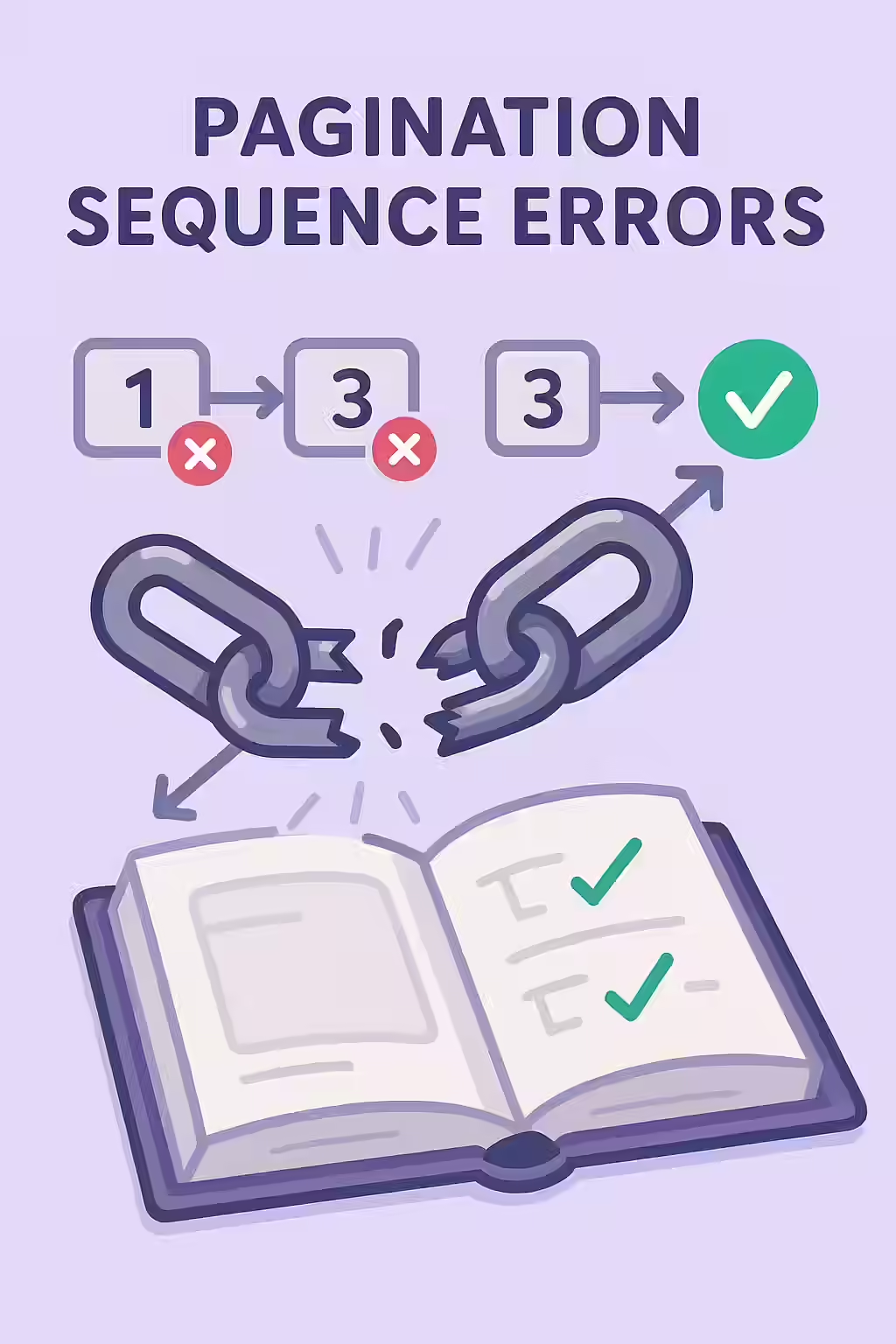
Think of your paginated series as a chain. Each link in the chain should connect to the next one in a logical order. A sequence error is a broken link in that chain, which can prevent search engines from following it to the end. For a broader look at pagination, see our guide on the pagination category.
Why a Logical Sequence is Non-Negotiable
As explained in Google’s own guide to pagination, a clear and logical sequence is essential.
- Crawlability: A broken sequence can prevent search engines from discovering all of the pages in a paginated series.
- Indexing: If a page can’t be crawled, it can’t be indexed. This means that some of your content may not be visible in the search results.
A Step-by-Step Guide to Fixing Sequence Errors
The goal is to ensure that your `rel=”next”` and `rel=”prev”` tags form a continuous chain from the first page to the last. For more on this, check out this guide to pagination best practices from Moz.
Code Example: The Fix
<!-- Before: Page 2 incorrectly links to page 4 --> <!-- On page 2 --> <link rel="next" href="/category/page/4/" /> <!-- After: Page 2 correctly links to page 3 --> <!-- On page 2 --> <link rel="next" href="/category/page/3/" /> - Crawl Your Site: Use an SEO audit tool like Creeper to identify any pagination sequence errors.
- Check Your `rel=”next”` and `rel=”prev”` Tags: Ensure that each page in the series correctly links to the next and previous pages.
- Validate the Fix: Recrawl your site to confirm that the sequence is now correct.
Frequently Asked Questions
What is a pagination sequence error?
A pagination sequence error is a technical SEO issue where the `rel=”next”` and `rel=”prev”` tags in a paginated series do not form a logical, unbroken chain. For example, if page 2 links to page 4 as the next page, the sequence is broken, and search engines may not be able to discover all of the pages in the series.
Why are pagination sequence errors a problem for SEO?
Pagination sequence errors are a problem for SEO because they can prevent search engines from crawling and indexing all of the pages in a paginated series. This means that some of your content may not be visible in the search results, which can lead to a loss of organic traffic.
How can I find and fix pagination sequence errors?
The most effective way to find pagination sequence errors is to use a website crawler like Creeper. It will scan your site and identify any paginated series with a broken sequence. The fix is to work with your developer to ensure that the `rel=”next”` and `rel=”prev”` tags are correctly implemented on all paginated pages.
Ready to fix your broken chains? Start your Creeper audit today and see how you can improve your website’s pagination.