Going Global: A Guide to Localization and International SEO

Localization is the process of adapting your website’s content and functionality to a specific language, region, and culture. It is the cornerstone of any successful international SEO strategy. A properly localized site goes beyond simple translation; it provides a culturally appropriate experience that builds trust with a global audience and sends clear signals to search engines about which users you are trying to reach. A successful strategy rests on three pillars: technical setup, content relevance, and international authority.

Think of your website as a global franchise. You wouldn’t open a restaurant in a new country without adapting the menu to local tastes and customs. Similarly, your website needs to be tailored to each target market to be successful. This involves a deep understanding of both the technical and cultural nuances of each region, from implementing the correct hreflang tags to performing international keyword research.

Key Topics in Localization and Hreflang

A complete localization strategy involves a deep understanding of the `hreflang` attribute and its many potential pitfalls. The following guides cover the most critical aspects of a technical international SEO audit.

category image

The Global Handshake: Why Your Hreflang Needs an ‘x-default’

Learn why the x-default hreflang attribute is crucial for international SEO, how it improves user experience, and the correct way to implement it.

Conflicting Signals: How Multiple Hreflang Entries Confuse Search Engines

Declaring multiple hreflang entries for the same language-region combination is a critical error that can invalidate your international SEO signals. Learn how to fix it.

The Conflicting Signal: Hreflang Links to a Noindexed Page

An hreflang tag pointing to a noindexed page is a critical error that confuses search engines. Learn why this sends a conflicting signal and how to fix it for proper international SEO.

The Wasted Signal: Hreflang Links to a Non-Canonical Page

An hreflang tag must always point to the canonical URL of the alternate page. Pointing to a non-canonical version is a critical error that wastes link equity and confuses search engines.

The Conflicting Signal: A Guide to Non-Indexable Pages with Hreflang Tags

A non-indexable page with hreflang tags is a critical error that confuses search engines. Learn why this sends a conflicting signal and how to fix it for proper international SEO.

The Missing Link: A Guide to Self-Referencing Hreflang Tags

A missing self-referencing hreflang tag can break your entire hreflang implementation. Learn why every page in a set of alternates must link to itself.

Speaking the Right Language: A Guide to Hreflang Codes

Incorrect hreflang language or region codes can cause major international SEO issues. Learn how to use the correct ISO codes to avoid them.

The Conflicting Signal: A Guide to Hreflang and Canonical Tag Issues

Using a non-canonical URL in your hreflang tags is a critical error that confuses search engines. Learn why every hreflang link must be a canonical URL to ensure proper international SEO.

The Two-Faced Page: A Guide to Not Using Canonical in Hreflang

Learn what happens when your hreflang tags point to non-canonical URLs, and how to fix this critical international SEO issue.

The Dead End: Why Non-200 URLs Invalidate Your Hreflang Tags

Using non-200 URLs (redirects, 404s, etc.) in your hreflang tags breaks the required chain of reciprocal links. Learn why every hreflang URL must be a live, 200 OK page.

The Missing Link: Why Unlinked Hreflang URLs Are an SEO Problem

Unlinked hreflang URLs create orphan pages that are difficult to crawl and rank. Learn why internal linking is a crucial, separate step for your international SEO strategy.

Location, Location, Location: A Guide to Hreflang Tag Placement

Placing hreflang tags outside the section renders them invisible to search engines. Learn the three valid methods for implementing hreflang for international SEO.

The Tower of Babel: A Guide to Inconsistent Language and Region Confirmation Links

Inconsistent hreflang confirmation links, where the return tag is missing or incorrect, can invalidate your international SEO signals. Learn how to fix this critical issue.

Speaking the Right Language: A Guide to Correct Hreflang Codes

Using incorrect language or region codes in your hreflang tags will invalidate them. Learn the correct ISO 639-1 and ISO 3166-1 Alpha 2 formats to fix your international SEO.

For more on the importance of a well-structured website, check out this guide to international SEO from Moz. For Google’s official perspective, their guide on managing multi-regional sites is an essential resource.

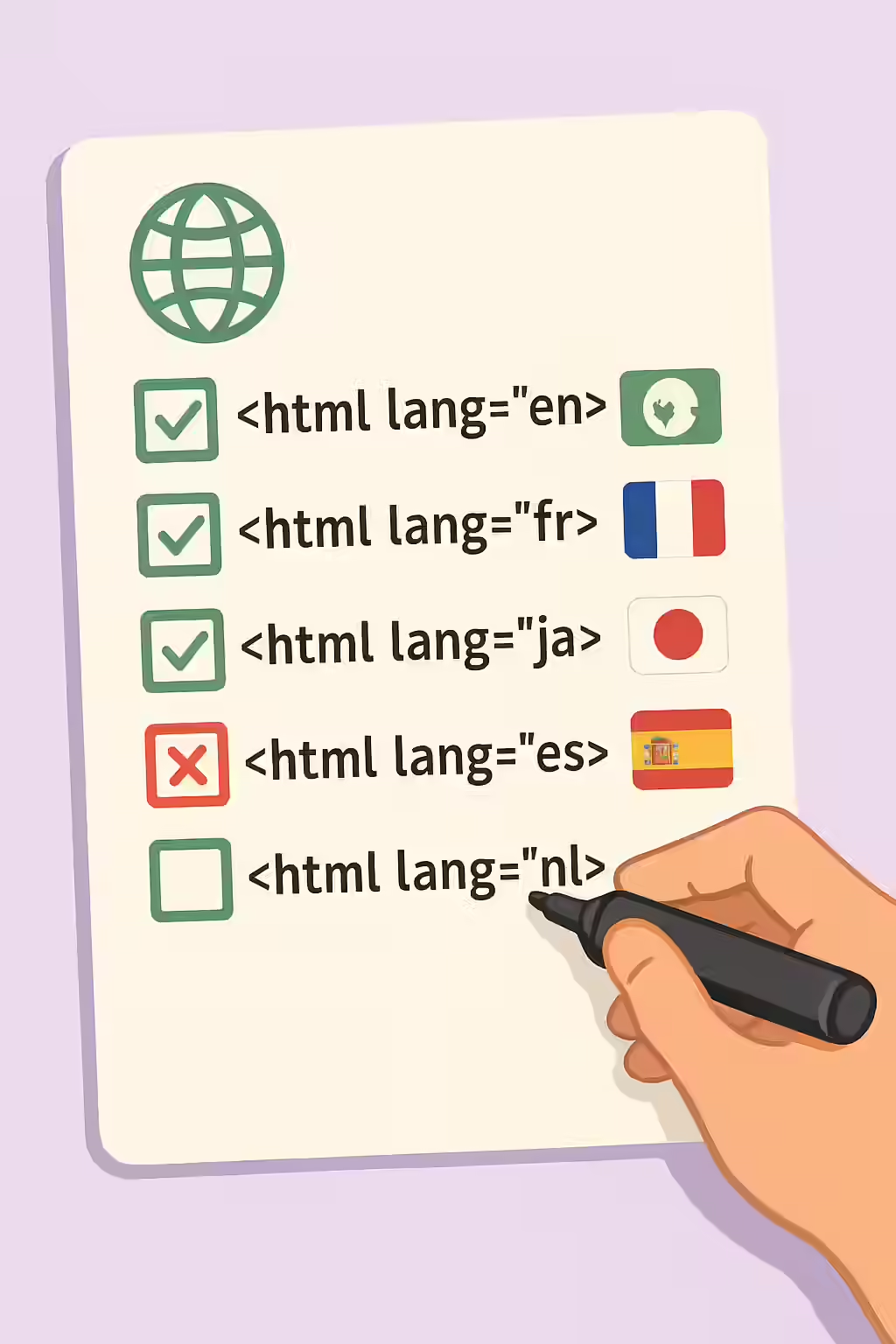
An illustration of a checklist, symbolizing the importance of making sure your website is well-localized.

Frequently Asked Questions

What is the difference between localization and internationalization?

Internationalization is the process of designing a website so that it *can* be adapted to various languages and regions without engineering changes. Localization is the actual process of adapting the internationalized website for a *specific* region or language, including translating text and adding culturally relevant content.

Should I use subdomains or subdirectories for different languages?

This is a long-standing debate in SEO. Subdirectories (e.g., `example.com/de/`) are generally recommended because they consolidate authority to a single root domain. Subdomains (e.g., `de.example.com`) can sometimes be treated as separate entities by search engines. However, both can be effective if implemented correctly with proper hreflang tags.

What are ccTLDs?

A ccTLD is a country-code top-level domain, such as `.de` for Germany or `.fr` for France. Using a ccTLD is a strong signal to search engines that your site is specifically for that country. However, it requires managing multiple, separate websites, which can be a significant undertaking.

Ready to tackle all your SEO issues head-on? Start your comprehensive audit with Creeper today.

Get in Touch

Have questions about our services? Contact us today for a free consultation and performance audit.

    By filling out this form, you agree to our Privacy Policy.