The `hreflang` attribute system is built on a simple but strict principle: reciprocity. If Page A declares that Page B is its Spanish-language equivalent, then Page B must have a return tag that confirms Page A is the English equivalent. When this reciprocal link is missing or incorrect, you have an inconsistent language and region confirmation link. This is one of the most common and critical `hreflang` errors, as it invalidates the signal and tells search engines to ignore your international targeting instructions.
Think of it as a two-way handshake. Page A extends its hand to Page B, but if Page B doesn’t extend its hand back, the connection is never made. Search engines require this mutual confirmation to be confident that the pages are true alternates and that you control both. For a broader look at international SEO, see our guide on the localization category.
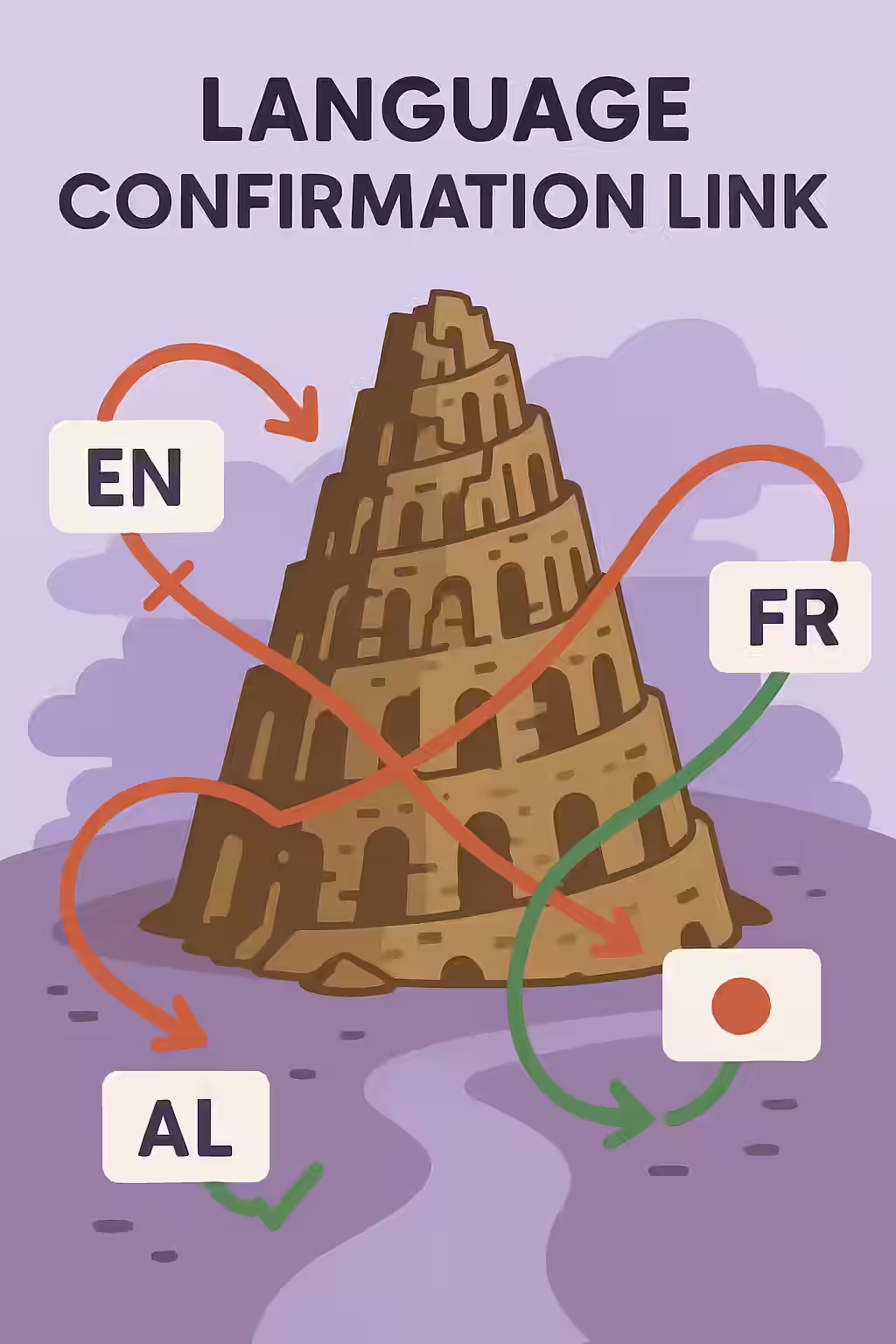
A Step-by-Step Guide to Ensuring a Perfect Handshake
Fixing inconsistent confirmation links requires a meticulous audit of your `hreflang` implementation. For Google’s official guidance, refer to their documentation on localized versions of your page.
Example: Fixing a Missing Return Tag
Before:
<!-- On page https://example.com/us/ --> <link rel="alternate" hreflang="en-us" href="https://example.com/us/" /> <link rel="alternate" hreflang="es-es" href="https://example.com/es/" /> <!-- On page https://example.com/es/ --> <link rel="alternate" hreflang="es-es" href="https://example.com/es/" /> <!-- Missing return tag to en-us -->After:
<!-- On page https://example.com/us/ --> <link rel="alternate" hreflang="en-us" href="https://example.com/us/" /> <link rel="alternate" hreflang="es-es" href="https://example.com/es/" /> <!-- On page https://example.com/es/ --> <link rel="alternate" hreflang="en-us" href="https://example.com/us/" /> <link rel="alternate" hreflang="es-es" href="https://example.com/es/" />For more on common `hreflang` mistakes, such as hreflang language issues, check out this guide from Ahrefs.
Frequently Asked Questions
What is a ‘return tag’ or ‘confirmation link’?
A ‘return tag’ is a core requirement of hreflang. If Page A links to Page B with an hreflang attribute, then Page B *must* have a corresponding hreflang tag that links back to Page A. This reciprocal link is the ‘confirmation’ that the two pages are indeed alternates of each other. If this return tag is missing, the entire signal is invalid.
Does the entire set of hreflang tags have to be identical on every page?
Yes. Every page in an hreflang set must have the exact same set of hreflang tags, including a self-referencing one. This ensures that no matter which page Googlebot crawls first, it gets the complete and consistent picture of the entire language/region cluster.
How do I check for these errors across my entire site?
Manual checking is nearly impossible. The most reliable method is to use a website crawler like Creeper. It will crawl every page, extract all hreflang annotations, and then crawl the destination URLs to verify that the required return tags are present and correct, providing a full report of any inconsistencies.
Is your international SEO handshake firm? Start your Creeper audit today to find and fix all hreflang confirmation errors.