Internal links are the primary way that search engines understand the structure of your site and distribute PageRank (link equity). When a page’s only internal links are marked with the `rel=”nofollow”` attribute, it becomes an orphan page in the eyes of search engines. These pages with only nofollow inlinks are effectively cut off from the flow of authority, which severely hinders their ability to rank.
Think of your website’s link equity as electricity flowing through a circuit. A standard ‘dofollow’ link is a copper wire that conducts power perfectly. A ‘nofollow’ link is like a piece of rubber in the wire; it stops the flow of electricity dead in its tracks. If a lightbulb is only connected with rubber wires, it will never light up. For a broader look at linking, see our guide on the links category.
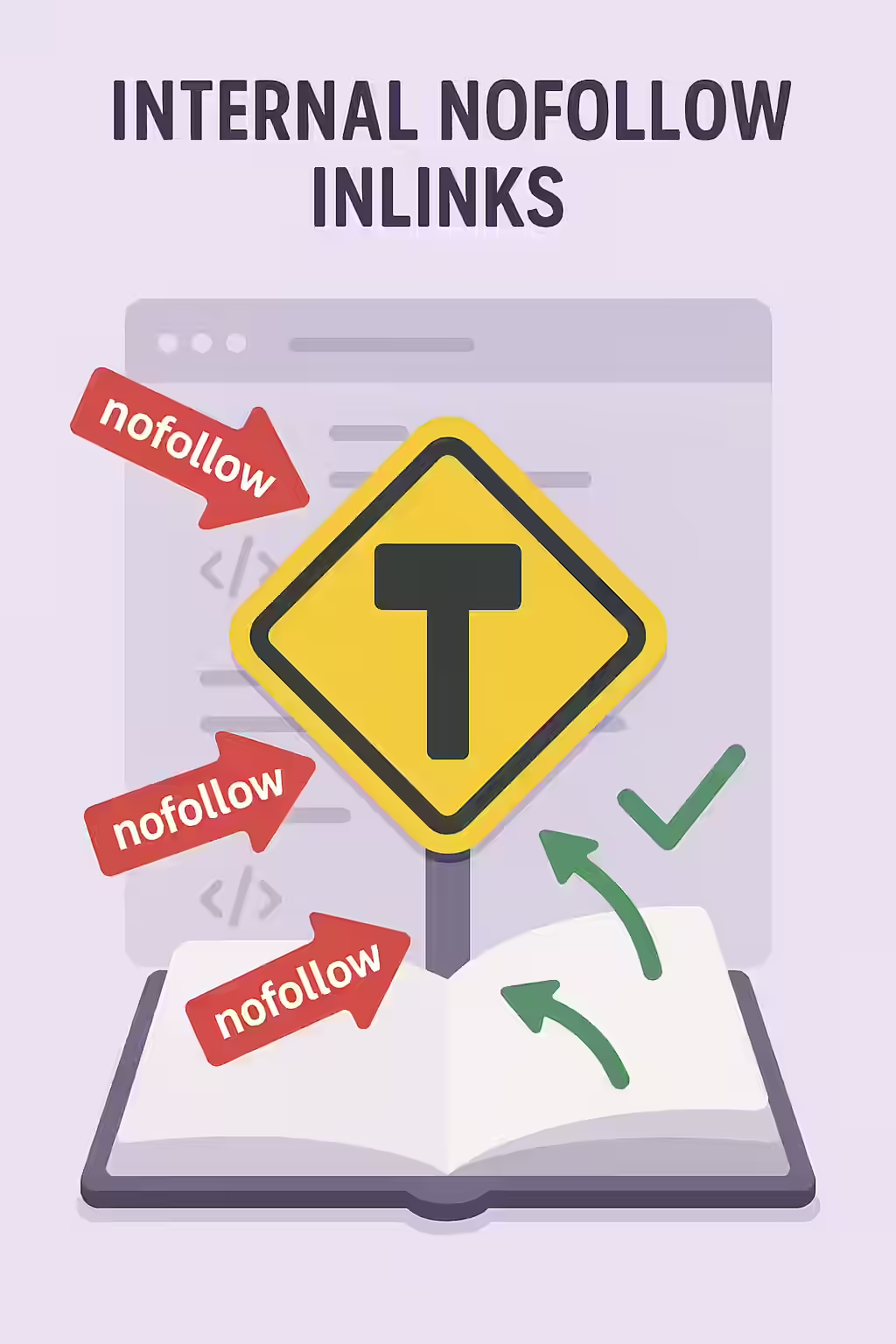
The Myth of ‘PageRank Sculpting’
Years ago, some SEOs used `nofollow` on internal links in an attempt to “sculpt” the flow of PageRank, hoping to concentrate more authority on their most important pages. This practice is now outdated and harmful. As Google has clarified, PageRank is divided among all links on a page, but if a link is nofollowed, that share of PageRank simply evaporates—it is not reallocated to the other links. Therefore, using `nofollow` on internal links is almost always a net loss for your site’s SEO.
A Step-by-Step Guide to Restoring the Flow
Fixing these issues involves a simple audit to find and remove the unnecessary `nofollow` attributes. For a deep dive into the `nofollow` attribute, this guide from Ahrefs is an excellent resource.
Example: Removing an Internal `nofollow`
<!-- Before: Nofollow attribute blocking PageRank --> <a href="/important-page" rel="nofollow">My Important Page</a> <!-- After: Nofollow attribute removed --> <a href="/important-page">My Important Page</a>By removing unnecessary internal nofollow tags, you allow your site’s authority to flow freely, giving all of your important pages a better chance to rank. This is a key part of a successful on-page SEO strategy.
Frequently Asked Questions
What is ‘PageRank sculpting’ and should I do it?
‘PageRank sculpting’ was an old SEO practice of using ‘nofollow’ on internal links to try and funnel PageRank to more important pages. This no longer works. Google has confirmed that PageRank is divided among all links on a page, but it evaporates through the nofollowed links; it is not redistributed to the followed links. Therefore, using ‘nofollow’ internally is almost always harmful.
What is the difference between nofollow, ugc, and sponsored?
`nofollow` is a general directive. `ugc` (User-Generated Content) is for links in comments and forums. `sponsored` is for paid or affiliate links. While Google now treats these as ‘hints,’ it’s a best practice to use the most specific attribute, and none of them should be used on your primary internal navigation links.
How can I find all pages that only have nofollow inlinks?
The most effective way is to use a website crawler like Creeper. It will crawl your entire site and analyze the link graph, specifically identifying any pages where 100% of their internal inlinks have the ‘nofollow’ attribute.
Are you creating dead ends on your own site? Start your Creeper audit today to find and fix pages with only nofollow inlinks.